What Is FreeCell?
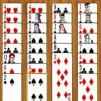
FreeCell is a classic solitaire card game known for emphasizing strategy over luck. Unlike many other card games, all 52 cards are dealt face up from the start, allowing players to see the entire board and plan their moves carefully.
Thanks to its blend of logic and strategy, FreeCell has become one of the most popular brain games, especially familiar to computer users from the classic Windows era.
Basic FreeCell Gameplay
In FreeCell, the board is divided into 8 tableau columns, 4 temporary spaces (free cells), and 4 foundation piles. Your goal is to move all the cards to the foundation piles, arranging them by suit in ascending order from Ace (A) to King (K).
You can move cards between columns in descending order while alternating colors (red and black). In addition, free cells act as temporary storage spaces, giving you greater flexibility when rearranging cards.
Strategy and the Role of Free Cells
The unique aspect of FreeCell lies in the need to carefully calculate each move. Although limited in number, free cells are extremely important because they help you unlock blocked cards and create new opportunities.
However, if you use them carelessly, you may quickly reach a deadlock. Therefore, keeping one or two free cells empty is generally a safe and effective strategy.
Tips and Reasons Why FreeCell Is So Appealing
To improve your FreeCell gameplay, consider these tips:
- Prioritize creating empty columns to increase mobility.
- Avoid filling all your free cells too early.
- Observe the entire board before making a move.
- Focus on moving lower-value cards to the foundation as early as possible.
These strategies will help you maintain control and reduce the risk of getting stuck later in the game.
Why Is FreeCell Still So Appealing?
FreeCell remains appealing because of its perfect balance between simplicity and challenge. The rules are easy to learn, but winning requires patience, logical thinking, and careful planning.
Moreover, since most deals are solvable, players are always motivated to try again and improve their performance. This creates a lasting appeal, making FreeCell a relaxing yet highly addictive game.
Brain Games You Can Try
TriPeaks Solitaire
UNO Online
Tic Tac Toe
These games offer a mix of strategy and fun, making them great alternatives if you enjoy FreeCell.